 Spacey
 Interleaving Study Method: How to Mix Practice Well
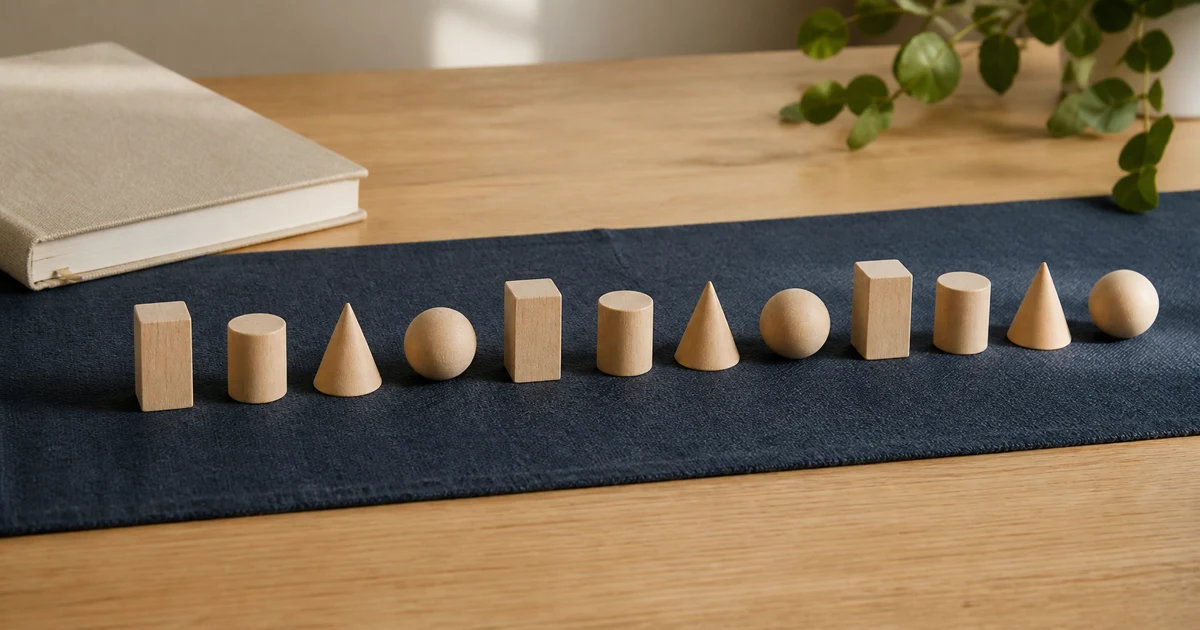
The interleaving study method mixes related problem types or categories within practice. Instead of finishing every type A problem before moving to type B, you alternate among A, B, and C. Each new item makes you identify what kind of problem it is and choose the method that fits.
Mixing related material is the constraint that separates interleaving from ordinary subject switching. The method is not a command to rotate randomly between chemistry, French, and medieval history every 20 minutes. It is most useful when telling the types apart is part of the skill.
What the interleaving study method means
Blocked practice groups one kind of work together:
A A A A B B B B C C C CInterleaved practice mixes those kinds:
A B C A C B A C B A B CSuppose A, B, and C are three geometry problems that require different formulas. In the blocked version, the section heading or the previous seven questions quietly tells you which formula to use. You still have to calculate the answer, but the practice has already made the first decision for you.
In the mixed version, the next problem may need any of the three formulas. You have to inspect the problem, classify it, retrieve a method, and then solve it. Exams and real work are inconsiderate enough to leave out chapter labels, so that extra decision can be worth practicing.
This is also why a study timetable that says “math, then Spanish, then biology” is not automatically interleaving in the research sense. It may be a sensible way to organize an evening. It does not necessarily train you to distinguish similar cases inside one domain.
Why interleaving can help
The leading explanation is discrimination. Mixing places related examples close enough for their differences to become visible. The learner practices both the procedure and the decision about when to use it.
In one study, Rohrer and Taylor taught college students to calculate the volume of several geometric solids. Students who received mixed practice later solved novel problems more accurately than students who had practiced each solid in a block. The mixed sequence required them to identify the solid and select the relevant formula on every problem.
The broader evidence is useful but less tidy than the usual “mixing beats blocking” slogan. A 2019 meta-analysis combined 59 studies and found a moderate average benefit for interleaving. Results depended heavily on the material. The average effect was positive for visual categories and smaller for mathematics. Results for explanatory text were unclear, while word-based tasks favored blocking on average.
Similarity also changed the result. Interleaving tended to help more when the categories were similar to one another and the examples within each category varied. That is exactly the situation where a learner must notice the boundary between types instead of relying on a repeated procedure.
A later systematic review of spacing and interleaving reached a compatible practical conclusion. Interleaving makes the most sense when the learner needs to distinguish apparently similar areas and connect each one with the right response.
Harder practice is not automatically better practice. A confusing session may expose a useful decision, or it may simply be badly designed. Judge the plan by whether it trains the choice you will need later, not by how impressively uncomfortable it feels.
When blocked practice is the better starting point
Blocking has a real job. When a method is new or complicated, several consecutive examples can help you understand the steps without also handling constant switches. You cannot practice choosing among methods you have not learned yet.
A major review of learning techniques rated interleaved practice as moderate utility. It noted promising results in mathematics, mixed findings in other areas, and a likely need for enough instruction or initial practice before learners mix complex tasks.
Use a short block first when:
- you cannot yet complete one example of the method with guidance;
- the procedure has several unfamiliar steps;
- each item is already easy to classify and the real goal is fluency;
- the material is a set of unrelated facts or words rather than confusable categories;
- switching would consume more attention than the target skill.
The useful sequence is often learn, block briefly, then mix. The transition should happen once you can attempt each method and the next skill is choosing between them. Blocking is not a failed version of interleaving. It is often the setup.
How to build an interleaved study session
Start with the decision the future task will require. If an exam presents several related problem types without labels, practice identifying them without labels. If a job requires distinguishing similar cases, mix those cases. Do not add unrelated material just to create motion.
Then build the session:
- Choose two to four related types that you need to tell apart.
- Learn each method well enough to complete one guided example.
- Prepare roughly equal practice for every type.
- Remove headings or labels that reveal the method.
- Mix the order and avoid long runs of one type.
- Attempt each item before checking the answer.
- Record selection errors separately from execution errors.
Tracking both kinds of error tells you what failed. Choosing the wrong formula is a classification problem. Choosing the right formula and making an arithmetic mistake is not. The next practice set should respond to the actual error instead of assigning the entire chapter again out of habit.
You can also combine interleaving with recall. Try the problem or explanation before opening the source, then check it. The active recall and spaced repetition guide explains why the attempt and the later return solve different parts of the problem.
A matched one-week blocked and interleaved plan
Here is a controlled workflow for four related geometry topics:
- A: volume of a rectangular prism
- B: volume of a cylinder
- C: volume of a cone
- D: volume of a sphere
Both plans use the same tutorials, 32 practice problems, eight problems per type, answer key, and Saturday check. Only the Tuesday-to-Friday order changes.
| Day | Blocked practice | Interleaved practice |
|---|---|---|
| Monday | Learn A, B, C, and D one at a time; complete one guided example of each. | Use the same initial familiarization. Mixing has not started. |
| Tuesday | AAAAAAAA | ABCDABCD |
| Wednesday | BBBBBBBB | BCDABCDA |
| Thursday | CCCCCCCC | CDABCDAB |
| Friday | DDDDDDDD | DABCDABC |
| Saturday | Complete the same eight unseen, unlabeled mixed problems and check the answer key. | Complete the same eight unseen, unlabeled mixed problems and check the answer key. |
| Sunday | Review the error log and decide what needs another review. | Review the error log and decide what needs another review. |
The mixing rule keeps all four types in every practice session, rotates the starting type, and prevents two identical types from appearing in a row. Saturday records formula-selection errors separately from calculation errors.
This plan is a mechanics demonstration, not a memory experiment. Nobody completed it for this article, and there is no invented score at the end. Its purpose is to show how to compare the two schedules without quietly giving one group more problems, more time, or an easier check.
You can reuse the structure for grammar forms, diagnostic categories, musical techniques, or other material where choosing among related responses matters. Replace A through D with real tasks. Keep the total practice comparable and the final check unlabeled.
How interleaving differs from spaced repetition
Interleaving controls order within practice. Spacing controls the delay before material returns.
A session can interleave A, B, and C today and never revisit them. That is mixed but not spaced. You can also review A on Monday, Thursday, and the following Tuesday while doing only A in each session. That is spaced but blocked.
Many useful plans do both. Schedule the topics across separate days, then mix related examples inside a review. The distinction helps because the two choices can fail independently. A neat mixed worksheet does little for long-term availability if it disappears after Tuesday. A perfect calendar does little if every review tells you which method to use before you have looked at the problem.
For help choosing the across-day gaps, use the spaced repetition schedule guide. There is no universal interval sequence for interleaving because the order and the delay answer different questions.
Where Spacey fits
Spacey handles the across-day scheduling layer. You can keep the four geometry topics as separate studies and schedule when each one returns. When related topics are due, use a mixing rule like the one above inside the review session.
The rest remains yours. Spacey does not supply the problems, construct an A-B-C-D sequence, decide which formula applies, or grade the answer. It brings the topic back on a date. You prepare and complete the practice.
Interleaving needs judgment about the material, while scheduling mostly needs a reliable calendar. The app remembers the dates; the learner controls the practice.
Ready to Remember More?
Download Spacey and start scheduling your reviews today.
Frequently Asked Questions
What is the interleaving study method?
The interleaving study method mixes related problem types or categories within practice. Instead of completing every problem of type A before moving to B, you might use an A-B-C-A-C-B order. This makes choosing the right method part of the practice.
Is interleaving better than blocked practice?
It depends on the material and the learner's stage. Interleaving can help when you need to distinguish related categories or choose among similar solution methods. Blocked practice is often useful while first learning a complex method, and some word-based tasks have favored blocking in research.
What subjects work best for interleaving?
The clearest use cases involve related material that can be confused, such as several types of math problems, visual categories, grammar patterns, or diagnostic cases. Evidence is weaker for mixing unrelated subjects or using the same approach for plain text and word pairs.
Can you combine interleaving with spaced repetition?
Yes. Interleaving controls the order within a practice session, while spaced repetition controls when the topic returns on a later day. A routine can schedule reviews across a week and mix related problem types inside each review.